Our Blog

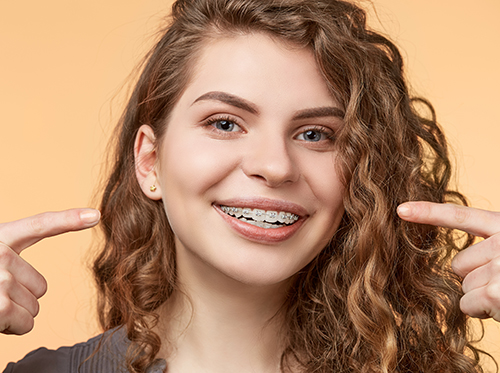
Going Back to School with Braces

September 5th, 2017

Going back to school is already an exciting (and sometimes nerve-racking) time so we don't want your braces adding to that. Our Wichita Falls, TX team has compiled some helpful tips to make the process as easy and fun as possible.

1. Make sure you pack or purchase braces-friendly lunches

Try to avoid overly crunchy foods (think carrots, celery, hard crackers) especially if your teeth are sore from having your braces tightened. But you shouldn't stop eating healthful foods that fall in this category. For instance apples can be sliced into wedges or carrots can be cut into coins.

You should also avoid sticky foods like candy or gum that can and will stick in your braces like glue! Softer foods are easier on your teeth and braces, so aim to make a good portion of your lunch on the softer side.

2. Have a braces kit in your backpack or locker

Having some useful items on hand at school when you need them is one of the most helpful things you can do. Pack some wax for sores or tenderness, floss and/or flossing tools made for braces, a toothbrush and toothpaste, a small cup for rinsing, a small mirror to check for trapped food, and some lip balm if your lips tend to chap. With these tools on hand, you'll avoid most if not all braces-related nuisances!

3. Know that you're not alone

If you're feeling self-conscious about your braces, don't. Be proud of them! There are many other people your age who have braces, and if they don't have them now, they probably will in the future. Relax and know that you're on the path to a straighter and healthier smile.

If you have any questions about making your transition into "braceshood," just ask Dr. Frech or any member of our Wichita Falls, TX team! We're here to help make your braces experience (and your smile) the best it can be.

Curing the Nail-Biting Habit

August 29th, 2017

Do you ever find yourself gnawing at your nails? Nail-biting is a very common and difficult to break habit which usually has its beginnings in childhood. It can leave your fingers and nail beds red and swollen. But if you think that your nails are the only ones getting roughed up by nail-biting you'd be mistaken—so are your teeth!

According to a study by the Academy of General Dentistry, those who bite their nails, clench their teeth, or chew on pencils are at much higher risk to develop bruxism (unintentional grinding of the teeth). Bruxism can lead to tooth sensitivity, tooth loss, receding gums, headaches, and general facial pain.

Those are some nasty sounding side effects from chewing on your nails. Most nail-biting is a sign of stress or anxiety and its something you should deal with. So what steps can you take if you have a nail-biting habit?

There are several things you can do to ease up on nail-biting:

  • Trim your nails shorter and/or get regular manicures – Trimming your nails shorter is an effective remedy. In so doing, they'll be less tempting and more difficult to bite on. If you also get regular manicures, you’ll be less likely to ruin the investment you’ve made in your hands and fingernails!
  • Find a different kind of stress reduction – Try meditation, deep breathing, practicing qigong or yoga, or doing something that will keep your hands occupied like squeezing a stress ball or playing with a yo-yo.
  • Wear a bitter-tasting nail polish – When your nails taste awful, you won't bite them! Clear or colored, it doesn't matter. This is also a helpful technique for helping children get over the habit.
  • Figure out what triggers your nail-biting – Sometimes it's triggered by stress or anxiety and other times it can be a physical stressor, like having hang nails. Knowing what situations cause you to bite your nails will help you to avoid them and break the habit.
  • Wear gloves or bandages on your fingers – If you've tried the steps above and they aren't working, this technique can prove effective since your fingernails won't be accessible to bite.

If you're still having trouble with nail-biting after trying these self-help steps, it's best to consult your doctor, dermatologist, or Dr. Frech. For some, it may also be the sign of a deeper psychological or emotional problem.

Whatever the cause, nail-biting is a habit you need to break for your physical and emotional well-being. If you have any questions about the effects it can have on your oral health, please don't hesitate to ask Dr. Frech during your next visit to our Wichita Falls, TX office.

Snacks for Healthy Teeth while Watching the Big Game

August 22nd, 2017

It's almost game day and you're wondering what to put on the menu for your guests. Most snacks are typically highly processed and unhealthy. Why not mix it up this year and opt for some snacks that promote good oral health? Here are some of Dr. Frech favorites!

  • Apples, carrots, celery, and cucumbers: These foods and other crispy, fibrous, fruits and vegetables are an excellent choice for the big game. Not only are they rich in vitamins and minerals which your body and mouth need, they are also known as detergent foods because of the cleaning effect they have on the teeth and gums. Try apples wedges spread with peanut butter and sprinkled with cinnamon.
  • Beans: Beans are filling because they are packed with fiber and that keeps you from opting for sugary or fatty snacks. Along with fruits and vegetables, beans should be one of the stars of your game-day snack lineup. How about some hearty chickpea hummus with cucumber chips?
  • Nuts like almonds, walnuts, pistachios, and cashews: Nuts abound in the minerals that help keep your teeth and gums strong like calcium, magnesium, and potassium. Put out a bowl of raw or roasted nuts for your guests as a crunchy, satisfying alternative to chips or crackers. Recent research even shows that the polyunsaturated fatty acids in nuts may help prevent gum disease. But remember not to eat the whole bowl! Nuts are very high in calories and a little goes a long way. Enjoy and handful or two along with your other healthy snacks.
  • Dark chocolate: This one may be hard to believe at first, but research shows chocolate can be great for your teeth and help prevent decay! Now don't run off and start stocking your pantry with a bunch of that super sweet stuff, because these benefits come mainly from the tannins, polyphenols, and flavonoids present in the cacao bean. Dark chocolate is the least processed variety of chocolate and the closest to the cacao bean, so make sure you purchase a variety that is listed as 70% cocoa or more for these benefits. Like with nuts, chocolate is easy to overdo — aim to eat two or three squares.

Xylitol: A significant factor for improving your oral health

August 15th, 2017

Xylitol is a naturally occurring sweetener found in tree bark, plants, fruits, and vegetables. The human body also produces it in small amounts. It looks and tastes like sugar, so as part of a health regimen, most people require no willpower to use it.

Xylitol is safe (approved by the World Health Organization) because only a small amount is needed for health benefits. With a glycemic index of seven, it is safe for diabetics. It has less than three calories per gram and 40% fewer calories than other carbohydrates. If eaten in extremely large amounts too quickly, it has a laxative effect in humans.

Tooth decay happens when bacteria in your mouth consume the sugars you eat. When you eat food that contains ordinary sugar, it gives energy to the bacteria on your teeth, allowing them to multiply and start making acids that destroy the enamel on the teeth.

Since xylitol is a natural sweetener derived from the fibrous parts of plants, it does not break down like sugar, so it helps maintain a neutral pH level in the mouth. Xylitol also prevents bacteria from sticking to the teeth because they are unable to digest it. That is how it protects the teeth from cavities.

With xylitol, the acid attack is diminished. With less bacteria and acid, your teeth stay healthier. The frequency of xylitol ingestion is important: aim for five grams a day, or one gram every three hours.

Studies of xylitol use as either a sugar substitute or a small dietary addition have demonstrated a dramatic reduction in new cavities. It has also stopped and even reversed some existing cavities. This effect is long lasting and possibly permanent. Low cavity rates persist even years after the trials have been completed.

Xylitol needs to be one of the first ingredients in a product to be effective. It is convenient and easy to use. You can find it in health food stores and specialty grocery stores. Xylitol can be delivered to your teeth in chewing gum, tablets, or even candy and mints.

It also comes in toothpaste, mouth rinse, baby oral wipes, gel and pacifiers, nasal wash, dry mouth spray, a granulated form for cooking, granulated packets to add to drinks, and commercially prepared foods. It can replace sugar on a one-to-one ratio.

Sweet rewards in xylitol are good for the body and the teeth! If you have specific questions please feel free to contact Wichita Falls Orthodontics. We look forward to seeing you soon!