Our Blog

When should my child be seen for an orthodontic evaluation?

July 11th, 2013

Thanks for asking! It really depends on the dental age of the patient rather than their chronological age. Usually a good time to have your child evaluated by an orthodontist is after the front permanent teeth have erupted into the mouth or if there appears to be extreme crowding of the teeth.

The American Association of Orthodontists recommends that children between the ages of seven and nine should be evaluated by an orthodontist. There are times when an early developmental treatment is indicated to correct situations before they become major problems. In these circumstances the patient will most likely benefit from a second phase of orthodontics when all of their permanent teeth have erupted.

Most full orthodontic treatment begins between ages nine and 14, and lasts from one to three years, with two years being the average. It’s important, however, that children be screened at an early age for Dr. Frech and our staff to assess if your child can benefit from orthodontic treatment and when treatment should begin.

We hope this helps, and invite you to give us a call if you have any questions about your child’s treatment at Wichita Falls Orthodontics.

Happy Fourth of July

July 4th, 2013

Every year, Americans all over the world celebrate the birth of the country and its independence on the Fourth of July. There are countless ways that people celebrate and they range from community parades and large scale gatherings to concerts, fireworks displays, and smaller scale celebrations among family and friends. For some people, July 4th is synonymous with baseball, while for others it is all about the beach of barbecues. However you celebrate, you can be sure that red, white, and blue is visible everywhere throughout the Wichita Falls, TX area.

The Beginnings of Fourth of July Celebrations

Although it wasn't officially designated as a federal holiday until 1941, the actual tradition of celebrating Independence Day goes back to the time of the American Revolution (1775 – 1783). At the time of the American Revolution, representatives from the 13 colonies penned the resolution that ultimately declared their independence from Great Britain. The continental congress voted to adopt the Declaration of Independence on July 2nd of 1776. Two days later, Thomas Jefferson's famous document that is now known as the Declaration of Independence, was adopted by delegates representing the 13 colonies.

First States to Recognize the Fourth of July

In 1781, Massachusetts became the first state (or commonwealth) whose legislature resolved to designate July 4th as the date on which to celebrate the country's independence. Two years later, Boston became the first city to make an official designation to honor the country's birth with a holiday on July 4th. In that same year, North Carolina's governor, Alexander Martin, became the first governor to issue an official state order stipulating that July 4th was the day on which North Carolinians would celebrate the country's independence.

Fun Facts About the Fourth of July

  • The reason the stars on the original flag were arranged in a circle is because it was believed that would indicate that all of the colonies were equal.
  • Americans eat over 150 million hot dogs on July 4th.
  • Imports of fireworks each year totals over $211 million.
  • The first “official” Fourth of July party took place at the White House in 1801.
  • Benjamin Franklin didn't want the national bird to be the bald eagle. He believed that the turkey was better suited to the coveted distinction. John Adams and Thomas Jefferson disagreed with him, and he was outvoted, so the bald eagle became the official bird of the United States.

For many, the tradition is something entirely different. Along the coastal areas of the United States, people may haul out huge pots to have lobster or other types of seafood boils. Others may spend the day in the bleachers at a baseball game, or at a park, cooking a great traditional meal over an open fire. No matter how or where you celebrate, one thing is certain: all Americans celebrate July 4th as the birth and independence of our country.

Dr. Frech and our team at Wichita Falls Orthodontics wish you a safe and happy Fourth of July!

Is Invisalign Teen® right for me?

June 27th, 2013

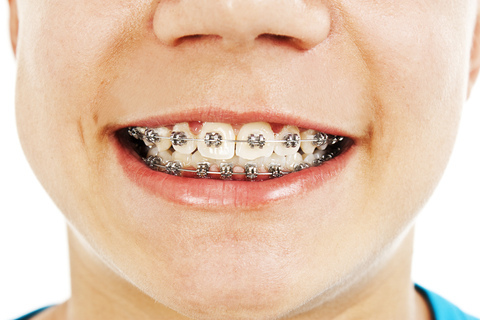
At Wichita Falls Orthodontics, we know that for most teens, the thought of having metal brackets and wires attached to their teeth for a period of time may be more than enough to delay orthodontic treatment. But thanks to innovations in technology and the recent wave of celebrities undergoing treatment, the days of “metal mouth” are all but gone. Teens today have more options than ever before, including high-tech, removable option called Invisalign Teen.

Invisalign Teen is a method of straightening your teenager's teeth using a series of clear, almost invisible, removable aligners. Invisalign combines the treatment plan recommended by Dr. Frech with proprietary 3-D, computer-generated software to move your teenager's teeth in very precise increments. Invisalign Teen is designed with “compliance indicators” that fade from dark to light during a period of time and let your child know when to change trays. And because we know kids tend to be forgetful sometimes, each aligner comes with replacement aligners in case the original aligner ends up lost or broken.

If you would like to schedule an initial consultation to talk with Dr. Frech to find out if Invisalign Teen is right for your child, we invite you to give us a call at our convenient Wichita Falls, TX office.

The Evolution of Braces

June 20th, 2013

Did you know that even in ancient times, people wanted to improve the look and function of their smiles? Wichita Falls Orthodontics thinks of modern orthodontic appliances as sleek, efficient technology, but this was not always so! Take a look at the highlights in the evolution of braces.

Ancient Times: From Greece to Rome

  • According to The Angle Orthodontist, Aristotle and Hippocrates first thought about methods for straightening teeth between 400 and 300 BC.
  • The Etruscans, in what we now know as Italy, buried their dead with appliances that maintained spaces and prevented collapse of their teeth and jaws during life. Archaeologists have discovered mummified remains in various locations that have metal bands wrapped around the teeth.
  • A Roman tomb has also been discovered in which the teeth were bound with gold wire, including documentation on the wire’s use as a dental device.

18th Century: A French Development

  • The French dentist Pierre Fauchard is acknowledged as the father of modern dentistry. In 1728 he published a book that described various methods for straightening teeth. Fauchard also used a device known as a “blandeau” to widen the upper palate.
  • Louis Bourdet was another French dentist who published a book in 1754 that discussed tooth alignment. Bourdet further refined the blandeau and was the first dentist to extract bicuspids, or the premolar teeth between canines and molars, for the purpose of reducing tooth crowding.

19th Century: Orthodontics Defined

  • Orthodontics started to become a separate dental specialty during the early 19th century. The first wire crib was used in 1819, marking the beginning of modern orthodontics.
  • During this period, gold, platinum, silver, steel, gum rubber, vulcanite, and occasionally wood, ivory, zinc, and copper were used — as was brass in the form of loops, hooks, spurs, and ligatures.
  • Edward Maynard first used gum elastics in 1843 and E. J. Tucker began making rubber bands for braces in 1850.
  • Norman W. Kingsley published the first paper on modern orthodontics in 1858 and J. N. Farrar was the first dentist to recommend the use of force over timed intervals to straighten teeth.

20th Century: New Materials Abound

  • Edward Angle developed the first classification systems for malocclusions (misaligned teeth) during the early 20th century in the United States, and it is still in use today. Angle founded the American Society of Orthodontia in 1901, which was renamed the American Association of Orthodontists in the 1930s.
  • By the 1960s, gold was universally abandoned in favor of stainless steel.
  • Lingual braces were the “invisible” braces of choice until the early 1980s, when tooth-colored aesthetic brackets made from single-crystal sapphire and ceramics became popular

Today

As we arrive in the present, you need only look at your own braces to see how far we’ve come. Your treatment plan was probably created with a 3D digital model, and we’ve likely used a computerized process to customize your archwires. Perhaps you have clear aligners, self-ligating brackets, or highly resilient ceramic brackets with heat-activated wires.

Orthodontics has come a long way from the days of Aristotle, and even the bulky wrap-around braces of just 60 years ago. Regardless of your specific treatment plan, the development of high-tech materials and methods has made it possible for your orthodontic experience to be as effective, efficient, and comfortable as possible. Call our office in Wichita Falls, TX to schedule your first orthodontic consultation!

http://www.angle.org/doi/full/10.1043/0003-3219(2002)0722.0.CO;2 http://www.archwired.com/HistoryofOrtho.htm