Our Blog

Orthodontics and Whole Body Health

April 30th, 2025
In recent years, many links have been established between orthodontic treatments and whole body health. According to the National Institute of Dental and Craniofacial Research, researchers have observed that people with gum disease are more likely to develop heart disease or experience difficulty controlling blood sugar than people without gum disease. While researchers continue to find associations between oral health and the overall health of the body, as of yet it hasn’t been determined whether gum disease is the sole cause of these health conditions. What can be determined, however, is that good oral health isn't just about maintaining a healthy smile; it has an impact on the health of your entire body.

The associations between gum disease and whole body health

The links between the health of your mouth and the health of your body are too many to ignore. Is it a coincidence that gum disease and other health problems occur together? Researchers don’t think so, despite the lack of definitive proof.

Here are four possible connections between the health of your mouth and the health of your body.

  • Excessive oral inflammation has been linked to a greater incidence of clogged arteries.
  • The American Society of Microbiology has revealed that certain types of oral bacteria can infect the arterial cells and weaken the wall of the heart.
  • Loose teeth are often believed to be a warning sign for osteoporosis, a disease that causes the bones to become less dense.
  • Some studies suggest women with gum disease are more likely than those without gum disease to deliver preterm, low-weight babies.

Orthodontics and gum disease

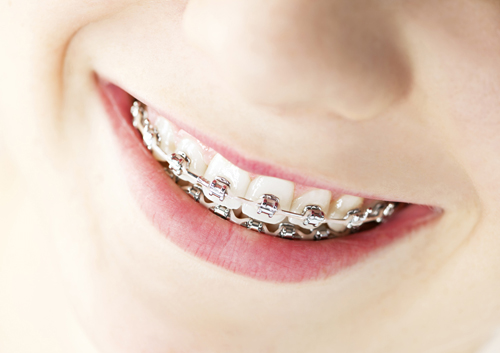
So what does undergoing orthodontic treatment at Wichita Falls Orthodontics have to do with gum disease? Braces do so much more than give you a nice-looking smile. Quite simply, straight teeth are easier to keep clean than crooked teeth. Your toothbrush is able to remove more plaque-causing bacteria, and your floss is more effective at ridding tiny particles between your teeth.

Despite the lack of hard facts in these findings, the message is clear: If you improve your oral health, you will also have a greater chance of maintaining the health of your entire body. And that’s a chance Dr. Frech and our team at Wichita Falls Orthodontics believe is worth taking. For more information about this topic, please give us a call at our convenient Wichita Falls, TX office or ask Dr. Frech during your next visit!

Whitening Teeth with Braces

April 23rd, 2025

Now that you are working hard to improve your dental health and appearance with your braces, it might seem like a logical time to whiten your teeth as well. But should you go ahead with home kits or a professional whitening? The answer might be yes, but not quite yet!

Toothpaste

The easiest way to whiten teeth is regular use of a whitening toothpaste. But these do not make a major difference in tooth color and may also contain abrasives which can damage ceramic brackets and make them more likely to stain. And, whether you have metal or ceramic braces, the brackets used are bonded to your teeth. Any part of your tooth covered by a bracket will not be affected by the whitening paste. Ask our office if you are thinking of using one of these products. We will be happy to recommend the best toothpastes to use while your braces are in place.

Whitening Strips and Trays

Whiteners can be applied at home with strips or tray kits. Strips are coated with a whitening gel and then pressed around your teeth. Tray kits provide a mouthguard-like appliance, which is filled with whitening gel. But neither strips nor tray solutions will whiten any area covered by brackets. When your braces come off, there might be noticeable differences in color on each tooth. Strips are difficult to apply with braces, and trays need to be custom-designed to fit your braces and make sure they don’t disturb your orthodontic work. One size most definitely does not fit all! Finally, these whitening agents can cause tooth and gum sensitivity, especially around the time of adjustments. Many manufacturers do not recommend using their products while you have braces. Please talk to us if you are thinking of using them.

Professional Whitening

A dental professional can whiten your teeth in office for the best possible results. The most effective treatments for your unique teeth are combined with protective care of your gums and mouth. Whether this treatment is appropriate while you have braces is something we are happy to discuss.

The best way to keep your teeth bright is to keep up your regular dental routine! Brushing and flossing are more important than ever now, because plaque builds up around brackets. Avoid foods that stain teeth and rinse or brush after every meal and snack. Dr. Frech will show you the best way to take care of your teeth while your braces are on—and that includes the best way to keep them white and bright. Talk to us about the perfect time to whiten your beautiful smile during your next visit to our Wichita Falls, TX office. And if you have to wait a few extra days for the smile you’ve been working toward, truly, the wait will be worth it!

Does my child need two-phase treatment?

April 23rd, 2025

You might be surprised to see one of your second grader’s friends with a dental appliance. Isn’t orthodontic work just for teenagers? And, if not, should your seven-year-old be sporting braces right now? The answer to both of those questions is “Not necessarily.” Two-phase treatment is a process designed to correct issues that arise during different times in your child’s life.

First Phase Treatment

We recommend that every child have an orthodontic evaluation around the age of seven to determine if there is a problem that would benefit from early treatment. First phase orthodontics is not the same as orthodontics for older patients. The focus here is on the developing bone and muscle structures which form your child’s bite and provide space for the permanent teeth when they arrive.

There are some clear-cut orthodontic goals that are much easier to attain when children’s bones are still growing.

  • Reducing Crowding

If your child’s mouth is small, the permanent teeth will have little room to fit in when they arrive. We may recommend gently enlarging the upper dental arch with the use of a palatal expander. This device will provide room for the adult teeth, and could potentially shorten second phase treatment time. Sometimes the extractions necessary to create more room for permanent teeth in later years can be avoided, as well as the possibility of an impacted tooth—one which doesn’t erupt because it is blocked by other teeth.

  • Dealing with Jaw and Bite Concerns

Bones and muscles do not always develop properly, leading to problems with jaw and facial structure. Your younger child still has growing bones, so this is a great time to gently re-form the jaw into a healthy shape. Problems caused by crossbites, underbites, open bites, and other malocclusions can be reduced with early treatment.  

  • Protecting Teeth

If your child has protruding front teeth, these teeth are more likely to be damaged in falls, at play, or while participating in sports. We can gently reposition them.

Second Phase Treatment

Second phase treatment is designed for your older child. After a resting period, when the permanent teeth finish erupting, we should see your child to evaluate any further orthodontic needs. This is the time to finish the process of straightening the teeth and making sure that each tooth fits together properly for a comfortable and healthy bite. This phase usually makes use of braces or aligners, and can take approximately 12-24 months.

Two-phase treatment is not necessary for every child. But there are some unique reasons that early orthodontics might be recommended for your child, even if it’s clear that more orthodontic work will be needed later. Make an appointment with Dr. Frech at our Wichita Falls, TX office, and let’s evaluate your child’s orthodontic needs, whether now or in the future, for a lifetime of beautiful smiles.

Start Your Day Off with a (Healthy) Smile!

April 16th, 2025

If there’s one meal that can claim the title of “Sweetest Meal of the Day,” it’s almost certainly breakfast. Sugary cereals, syrup-covered waffles, oatmeal with honey, cinnamon toast (which is literally sugar poured on toast)—it’s hard to imagine another menu even coming close. But you’re trying to keep your diet as healthy as possible. What to do?

First, no need to deprive yourself of the occasional pastry or stack of pancakes. The real problem with breakfast isn’t so much sugar as it is added sugar.

  • Just a Spoonful of Sugar? What’s So Bad About That?

Nothing! Many healthy foods have natural sugars. Milk contains lactose sugar, and it also contains calcium and is enriched with vitamin D—both of which are essential for strong bones and teeth. Fruits get their sweetness from a sugar called fructose, and deliciously provide vitamins, minerals, antioxidants, and fiber to our diets.

Even processed sugar is surprisingly low in calories. In fact, a teaspoon of white sugar has only about 15 calories. But this teaspoon is also rich in nutrients for cavity-causing bacteria. The oral bacteria in plaque use sugars and carbohydrates from food particles as a fuel source to produce acids. These acids erode enamel and lead to cavities.

Choosing breakfast foods without additional sugars, then, is an easy way to reduce the number of empty calories in your diet while safeguarding the health of your teeth. We have a few suggestions.

  • Be Selective with Cereals

If the word “sugar” or “honey” or appears on the box, that’s a hint that your favorite cereal is heavy on the sugar. But there’s a more scientific way to tell just how much sugar is in that spoonful.

While the colorful packaging and playful mascots are eye-catching, check the black-and-white panel with nutritional facts found on every box. If one serving equals 27 grams, and the sugar in that serving equals 15 grams, you know you have a problem. And cereals marketed to children are especially “rich” in added sugar.

But luckily, you don’t need to give up your morning bowl. Many cold cereals are available that offer whole grains, protein, and fiber without a lot of added sugar. Spend some time in the cereal aisle comparing, or, to make life easier, there are many online sites which recommend the best (and worst) cereals in terms of sugar content.

  • Use Your Judgment with Juices

Fruits are packed with important nutrients. Not only do they provide essential vitamins and minerals, they’re a great source of water and fiber. If you drink 100% fruit juice, you are getting the benefit of most of the vitamins and minerals found in fruit. (You’re also getting less of the fruit’s natural fiber, and more of the fruit’s natural sugar, so consider fresh fruit as an option occasionally.)

But when fruit juice comes with “cocktail,” or “punch,” or “ade” attached to the end of it, there’s often something else attached—added sugar. For natural fruit flavor and the least amount of sugar, stay with 100% unsweetened fruit juice.

  • Search Out “Surprise” Sugars

Remember the childhood excitement of searching through your cereal box for the prize inside? Fun! What’s not so much fun? The surprises you might find when you search through the labels on your favorite breakfast items—because added sugars make their stealthy way into many of our morning favorites.

When you compare plain, Greek, and low-fat yogurts, for example, the low-fat options are often higher in added sugar. A container of low-fat yogurt can provide 19 grams of sugar—that’s a tablespoon and a half!

And while you’re at it, be sure to compare the sugar content in granola bars. Some are full of nuts and grains, and some are full of added sugar.

Going out for a breakfast smoothie? Those can contain 70 grams of sugar and more. Making your own at home might be a little more time-consuming, but if you use fresh fruit as your sweetener, you can make sure that what you’re not consuming is added sugar. If you’re on the go, check out all-fruit options at your favorite smoothie shop.

Dr. Frech and our team aren’t asking you to eliminate sugar from your breakfast diet altogether. (Everyone loves a doughnut now and again.) But substituting some alternatives for your regular menu choices can reduce the amount of added sugars by tablespoons every meal. That’s another great reason to greet the morning with a smile!