Our Blog

Common Malocclusions

May 27th, 2024

When we think orthodontics, we commonly think teeth. Naturally! Straight teeth and a beaming smile are everyone’s orthodontic goal. But orthodontics is a field which specializes in more than misaligned teeth. While your beautifully aligned teeth are the visible outcome of your orthodontic work, a properly aligned bite is the foundation for your healthy smile.

A malocclusion occurs when the teeth and jaws aren’t properly aligned—they don’t fit together the way they should when the mouth is closed. A malocclusion, or bad bite, affects many people to some degree, but not always in exactly the same way. Some of the different types of malocclusion include:

  • Crossbite

A crossbite occurs when upper teeth fit inside lower teeth. An anterior crossbite refers to the front teeth, with one or more upper front teeth, or incisors, fitting behind lower front teeth. A posterior crossbite affects the back teeth, with upper teeth fitting inside the lower teeth on one or both sides of the jaw.

  • Crowding

When the jaw is small and/or the teeth are large, lack of space can result in crowded, twisted, or crooked teeth.

  • Open bite

An anterior open bite means that the front teeth don’t close when biting down, leaving an open space between the upper and lower teeth. A posterior open bite occurs when the back teeth don’t make contact when the front teeth close.

  • Overbite

Our upper front teeth naturally overlap the lower ones a small bit when the teeth are closed. An overbite occurs when the upper teeth significantly overlap the lower teeth.

  • Overjet

When the upper front teeth protrude too far forward over the bottom teeth, it’s called an overjet, or, sometimes, buck teeth. Where an overbite causes a vertical overlap, an overjet takes into account the horizontal relationship of the teeth.

  • Spacing

A jaw that is large, teeth that are small, missing teeth—these conditions can lead to gaps between the teeth.

  • Underbite

An underbite results when the lower teeth and jaw extend further forward than the upper teeth and jaw, causing the bottom teeth to overlap the top teeth.

If you have a malocclusion, what comes next? This depends.

Some malocclusions are so minor that no treatment is necessary. Some are the result of misaligned teeth. Some occur because the upper and lower jaws are growing at different rates. Some are a combination of teeth and jaw misalignments. Some are caused by genetics, while others are caused by injuries or habits like prolonged thumb sucking or tongue thrusting.

Because malocclusions are so varied, your treatment plan will be designed for your specific needs. Braces, aligners, appliances like the Herbst® appliance or the palatal expander, surgery for severe malocclusions—there is a larger variety of treatment options than ever before to help you achieve a healthy bite.

When teeth and jaws don’t fit together as they should, the consequences can be damaged teeth and enamel, problems with the temporomandibular joint, headaches and facial pain, and difficulty chewing, eating, and speaking.

The good news is that early intervention for children can help correct teeth and jaw problems before they become more serious, leading to easier orthodontic care in the teen years, and helping to avoid the possibility of surgery or extractions. This is why Dr. Frech and our team recommend an orthodontic assessment at our Wichita Falls, TX office for children around the age of seven.

If you’re an adult with concerns about your teeth or bite, there’s good news for you, too. Dr. Frech can devise a treatment plan to improve your bite and your smile no matter what your age.

Of course, despite our title, there’s really no such thing as a “common malocclusion” when we’re talking about your dental health. Each person—and each smile—is unique. Dr. Frech will diagnose your malocclusion and create a personalized plan carefully tailored to your exact needs, for an uncommonly attractive, confident, and healthy smile.
Hey, Metal Mouth, Hey, Train Tracks! Six Funny Comebacks for People Who Wear Braces

May 8th, 2024

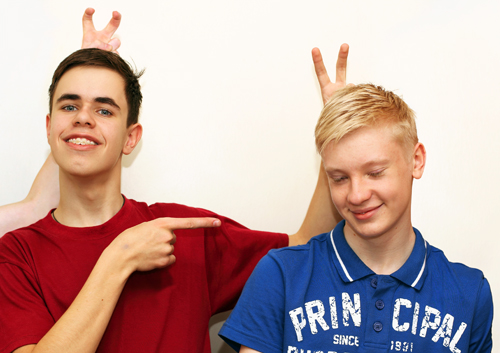
Brace-ism: believe it or not, it’s a concept. The Urban Dictionary defines brace-ism as “acting mean to people who have braces on their teeth.” Phrases like metal mouth, brace face, and train tracks are common jokes uttered by gap-toothed fools who like to make fun of people with braces.

While ignoring these comments and taking the high road is the best thing to do, there’s nothing wrong with having a few clever retorts and quick-witted comebacks up your sleeve.

  1. The next time someone calls you train tracks, break into an obnoxious train imitation, with lots of toot-toot and chuga-chuga-chuga. Finish off your crazy locomotive impersonation with some sort of deafening train horn. That’ll keep the bullies at bay.
  2. “It’s better to be a brace face than a space case.”
  3. Counter with a ridiculously childish joke that makes the schoolyard tormentor feel even smaller than he already is. “Oh. Yeah. Why did the deer need braces? Because he had buck teeth. Hahaha.” Top it off with an exaggerated eye roll.
  4. “Yeah, my brother tells that joke. He’s six. You guys should hang out.” That’ll stop the haters dead in their tracks. Or would that be train tracks?
  5. Here’s one from the sarcasm grab bag. “Well, I’m just glad there’s a way to fix what’s wrong with my face.”
  6. “I can’t wait to discuss this formative moment at our ten-year class reunion, when my teeth are razor-straight and you’re wearing adult braces.”


Wishing all our moms a happy Mother’s Day!

May 8th, 2024

"Motherhood: All love begins and ends there." - Robert Browning

We would like to take this moment to thank all the great moms out there for being so great during their child’s visits to Wichita Falls Orthodontics. Whether it’s driving their kids to regularly scheduled appointments or for “being there” while their child is treatment, the moms who come to our office are all stellar individuals, so Dr. Frech and our entire staff would like you to know that we appreciate you all!

Happy Mother’s Day and enjoy your special day!

I got my braces. Now what?

May 1st, 2024

You’ve taken the first step toward a healthier and more beautiful appearance by getting braces at Wichita Falls Orthodontics, and you’re probably wondering what comes next. The first week is the period of biggest adjustment, and there’s a lot to learn in this short time. Don’t worry; in a few short days your braces will feel completely natural.

The first week

On the first day, your braces will probably feel very odd in your mouth; it will take time to get used to them. By the second day, you may feel some soreness or pain. If you are going to experience any pain, the second and third days are when it will happen. Most pain can be dealt with by taking an over-the-counter pain reliever, such as Tylenol.

What about sore spots?

Your cheeks and tongue are getting used to your new braces, just like your teeth are. You may develop sore spots where this soft tissue rubs against the harsh metal of your braces. The best way to avoid this and allow your mouth to heal is by covering the metal spot with orthodontic wax. Break off a small piece and roll it into a ball in your hands. Dry the metal of the braces with a cotton swab, then wrap the wax around the sharp spot to create a cushion.

What if they break?

Braces are held onto your teeth with special orthodontic glue. Once in a great while, part of your appliance may come loose from the surface of a tooth. This won’t harm anything; it will just be slightly inconvenient. Call our office right away and we will be able to glue the bracket back on.

Make sure you avoid hard items such as ice, brittle, and other hard candies, and don’t open packages with your teeth. These habits can contribute to braces popping off. Even fairly innocent-sounding items like popcorn or French bread can be a culprit, so avoid eating any hard foods, or cut them up into small pieces before consuming.

If you have questions about which foods to eat and avoid, or if your braces are more sore than expected, feel free to contact our Wichita Falls, TX office and ask Dr. Frech and our team. We’re more than happy to help!